Market words are visitors’ primary interest
New business sales conversations are about market words.
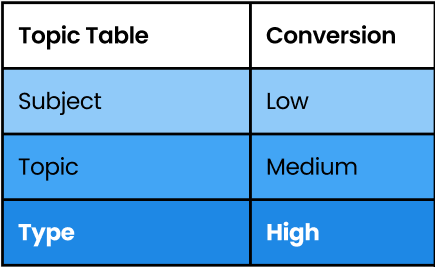
These subset words indicate the nature of the ‘searcher’ as commercial. The subjects, topics and types are a progression of sorts, navigating the conversation, we can change content based on ‘where they are’ in their re-search.
In non brand search, *new search.
- The market word concept is the key to value, those words define the presence of value.
Indicates sales interest
Imagine answering the sales department phone, the caller tells you the thing they’re interested in discussing – that’s the market word. It is a thing, the object, what they want to talk about.
Market words are the scope of the website visitors’ wants and needs. They stretch from vague interest all the way through to buying.
The absence of market words
Without a market word, there is no value to the phrase. Those visitors are not ‘in the market’. That should be of interest to those of us running paid click campaigns.
Inclusive interest
Every click could go on to be interested in everything else about the topic.
The search term or keyword is momentarily important to the individual. Their continued interest is defined by the topic. You can predict where the conversation might go.
Arrange content around market words
You’re giving visitors a clear way to develop their interest along the buyer-product timeline.
Websites are not built this way, content is not planned this way. A major disconnect in marketing.
Specificity is heightening levels of interest
The more specific the market word the more intent there is and the more valuable they are.
The three levels of topical interest
Subjects
The earliest stage of interest
Topics
The most gains are to be made
Types
The specific is more valuable
Value over Time
As people get more interested, and closer to buying, they are marking choices and decisions.
Product Market Fit
There is an inherent shape to market words that is pre-determined. The market is defined by the words that people are looking for.
The type is ‘included’ in the topic word. A searcn for braces inherently means they could be interested in all the types of braces.
Visitors start the conversation
The subject, or the topic, is what we need to talk about. It predicts ‘what else’ the visitor may be interested in.
Staying on topic, it is courtesy to ‘answer’ the visitor query. What we say must be relevant to their primary interest, even as we ‘work’ on their subject to help bring readers to care about the things we believe in.
The good news is that people on our sie are interested in way more ‘things’ than we realise.
The visitor “job to be done”
Market words drive the search framework, it represents everybody currently interested in ‘the thing that you do’.
These people are not likely to be currently interested in products and services, unless there are timeline words involved. But they could make progress.
Self Service Conversations
If we accept the idea of market words being ‘primary’ for the visitors, then
- we build the website in a different way, grouping topic information together
- we anticipate and map the visitor needs from subject to topic
- we begin to see where the conversation might go ‘post click’
The asbence of timeline words
Without timeline words, subject and topic words represent the least commercial ‘version’ of the market interest. Types on the other hand, are most specific and are more commercial.
The type people are more likely to be educated buyers
The absence of market words
It means the person is not at all commercially engaged. There is likely no value in those clicks whatsoever.
Being able to eliminate ‘no-market’ words could save a great deal in paid clicks.
The reason this is not well known: Perhaps if the search engine let everyone know which words lacked intent (if they realise), advertisers would stop paying for them in Google. Our competition would stop wasting their money on clicks from people without any intention of doing anything.